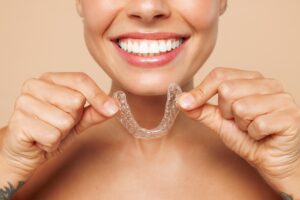
 Skipping your retainer, even for a few weeks, allows your teeth to gradually drift back toward their original positions, potentially undoing months or years of orthodontic progress. If you’ve noticed shifting, tightness, or gaps, Dr. John Cross can help you get back on track before the movement becomes permanent.
One of the most common slip-ups patients make following orthodontic treatment is not wearing their retainer. While it’s rarely intentional, it can have serious consequences. But understanding exactly what happens when you skip retainer wear can be the difference between a quick fix and a much bigger correction down the road.
The Short Answer: Your Teeth Have a Memory
After braces or Invisalign®, your teeth aren’t “done” moving just because the brackets came off or the last aligner tray was removed. The ligaments and bone surrounding your teeth remember their original positions, and they’ll happily migrate back there if given the chance. This is why orthodontists and dentists universally recommend retainers after any teeth-straightening treatment. They can hold your new smile in place while your bone and gum tissue stabilize around the corrected positions.
Stop wearing your retainer, and that stabilization process reverses. It doesn’t happen overnight, but it doesn’t take as long as most people assume, either.
How Quickly Do Teeth Shift?
Orthodontic relapse can begin surprisingly fast. Many patients start to notice subtle changes within just a few weeks of inconsistent retainer wear—things like:
- A retainer that suddenly feels tight or difficult to seat
- Slight rotation in the front teeth, especially the lower incisors
- Small gaps reopening between teeth that were once closed
- A bite that feels “off” compared to before
The lower front teeth tend to shift first and fastest, since they’re smaller and subject to constant pressure from the tongue, lips, and cheek muscles. Left unaddressed for months or years, this drift can become significant enough that a retainer that once fit perfectly no longer fits at all.
Why Retainers Are a Lifetime Commitment
Here’s something many patients don’t realize until they’re mid-treatment: retainer wear isn’t a temporary phase you graduate out of—it’s a lifelong responsibility, at least on some level. Your teeth are always subject to the natural forces of aging, chewing, and even the mild pressure of sleeping positions. Even people who never had orthodontic work notice their teeth shift slightly over the decades.
For those who invested time and money in straightening their teeth, whether through traditional braces or Invisalign®, that investment deserves protection. Most dentists recommend transitioning to nightly retainer wear indefinitely after the first year or so of full-time use. It might feel like overkill, especially years after treatment, but it’s a small nightly habit compared to the cost and time of re-treating a relapsed smile.
What If You’ve Already Stopped Wearing Yours?
If it’s been months (or longer) since you last wore your retainer, don’t panic—but don’t ignore it either. Here’s what typically happens next, depending on how far things have progressed:
Mild shifting: If the change is minor, your retainer might simply feel tight for a few nights before your teeth settle back into place. Wearing it consistently again, sometimes with a period of full-time wear, can often resolve small amounts of relapse.
Moderate shifting: If your retainer no longer fits comfortably or won’t seat properly at all, forcing it can cause discomfort or even damage to your teeth. At this point, it’s time to see your dentist rather than trying to power through on your own.
Significant shifting: In cases where teeth have moved considerably, a new retainer, a short round of clear aligner treatment like Invisalign®, or even a return to more comprehensive orthodontic care may be necessary to correct the relapse.
The key takeaway is that shifting teeth are far easier to manage early. The longer you wait, the more complex—and often more expensive—the correction becomes.
Invisalign®: Not Just for the First Round
Many people don’t realize that Invisalign® isn’t only for patients who’ve never had orthodontic treatment. It’s also an excellent option for correcting mild-to-moderate relapse after retainer neglect. Since Invisalign® uses a series of clear, custom-fitted aligners, it’s often a comfortable and discreet way to nudge shifted teeth back into alignment without committing to full braces again. For adults who don’t want to go back to metal brackets, this is frequently the most appealing path forward.
When to See Your Dentist
If you’re noticing any of the warning signs mentioned above, such as tightness, visible movement, gaps, or bite changes, it’s worth scheduling an evaluation sooner rather than later. A dentist can assess exactly how much movement has occurred and recommend the most efficient way to address it, whether that’s a new retainer, a short course of Invisalign®, or simply reinforcing better wear habits.
At OC Lifesmiles, cosmetic dentist John Cross, DDS, and his team regularly help patients get their smiles back on track after retainer setbacks. Whether you need a replacement retainer, want to explore Invisalign® as a touch-up option, or simply have questions about how to protect the results you worked hard for, the practice offers a straightforward path to keeping your smile exactly where you want it.
Key Takeaways
- Teeth naturally drift back toward their original position whenever retainer wear stops, since the surrounding bone and tissue haven’t fully “locked in” the new alignment.
- Shifting can begin within weeks, often starting with the lower front teeth and showing up as tightness or small gaps.
- Retainer wear is generally a lifelong habit, not a temporary post-treatment phase.
- The longer you wait to address relapse, the more involved the fix typically is.
- Invisalign® can be an effective option for correcting mild relapse, offering a discreet way to realign teeth without full braces.
- Dr. Cross at OC Lifesmiles can evaluate your situation and recommend the right next step to protect your smile.
Don’t wait for a minor shift to become a major setback. Contact our practice to schedule a visit with Dr. Cross so he can help keep your smile exactly where it belongs.